
Florence Nightingale is all about Terrain Theory
“All disease, at some period or other of its course, is more or less a reparative process, not necessarily accompanied with suffering: an effort of nature to remedy a process of poisoning or of decay, which has taken place weeks, months, sometimes years beforehand, unnoticed.” Florence Nightingale, 1859.
If that’s not terrain theory, I don’t know what is!
I should have, really, written a post explaining what terrain theory is, as it has been on my list of things to do for at least 18 months. But life, and especially doing a midwifery degree, has gotten in the way (just a little bit!), so instead I’m just going to give the briefest possible explanation and refer you to the work of a couple of others who can explain it much better than I can.
Terrain theory is about maintaining homeostasis in your body by eating well, thinking well and doing well (to miss-quote Dr Ulric Williams). Germs as objects of contagion, indeed, contagion itself, have not been proven, by following the correct scientific method, to cause illness. When one takes care of one’s terrain, any illness encountered (for it’s not about a complete absence of illness), can be dealt with swiftly and effectively without use of pharmaceuticals. It puts the focus of responsibility on the individual and doesn’t lay blame on any outside factors such as germs, viruses or pathogens.
Relying on a ‘doctor god’ to diagnose and validate your symptoms, without getting to the route of the issue, only serves to disempower you and bury symptoms under additional ‘side-effects’. Being responsible for your own health is an empowering process and one of the best gifts you can give yourself. When you realise that contagion isn’t a thing, you no longer fear it. Which is one of the most liberating occurrences I’ve ever experienced. I encourage you to explore the work of drsambailey.com and drtomcowan.com (amongst others) to gain a better understanding.
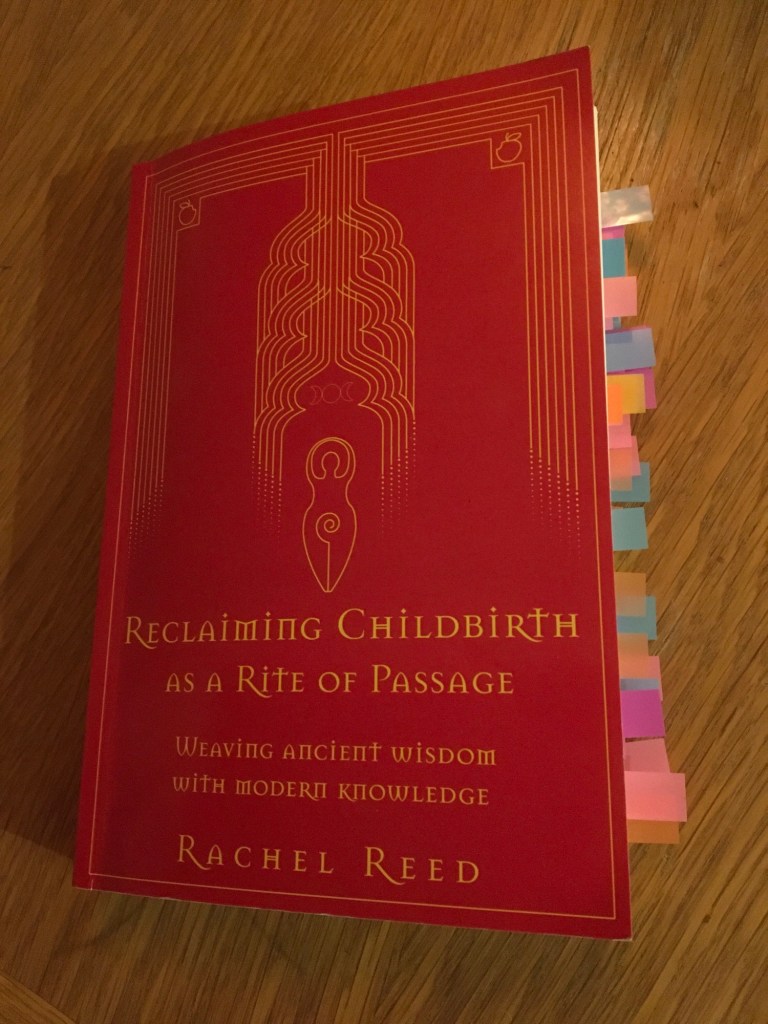
Anyhoo, back to our Florence. I’m only a third of the way through her Notes on Nursing, published in 1859, and I’ve been highlighting many, many paragraphs relating to terrain theory and her scepticism of germs and contagion. I think one of my favourites so far is “Is it not a fact, that when scarlet fever, measles, or small-pox appear among the children, the very first thought which occurs is, “where” the children can have “caught” the disease? And the parents immediately run over in their minds all the families with whom they may have been. They never think of looking at home for the source of the mischief. If a neighbour’s child is seized with small-pox, the first question which occurs is whether it had been vaccinated. No one would undervalue vaccination; but it becomes of doubtful benefit to society when it leads people to look abroad for the source of evils which exist at home.”
Although I do undervalue vaccination (see dissolvingillusions.com/graphs-images), I love that she ends this quote with imploring people to look within themselves and their environment rather than “abroad for the source of evils”.
Florence is credited with sanitary reforms in hospitals in England and overseas, based on her observations during the Crimean War. In Notes on Nursing, she deplores “Bad sanitary, bad architectural, and bad administrative arrangements often make it impossible to nurse” and that “Badly constructed houses do for the healthy what badly constructed hospitals do for the sick. Ill-informed medical men aid in sustaining the delusion, by laying the blame on “current contagions.”” Another perfect example of her understanding of terrain theory.
The book is also reminding me of my time as a healthcare assistant in a general hospital. I have never been a fan of the healthcare system and if you had told me twenty years ago that I would be working in a hospital (let alone training within the very same system), I would have laughed in your face (I knew, in the early noughties, when searching for a career, that I wanted to be able to help people to help themselves. I also knew, that to do that, being a nurse or a doctor was not the way I wanted to be able to help people. And then I found aromatherapy, phew!). However, needs must, and as my mum says, no experience is wasted.
I remember my very first day on the ward as a healthcare assistant, on a cold, dark, December morning. The healthcare assistant I was shadowing walked into the bay of five patients and immediately turned the fluorescent lights on. She didn’t introduce herself, she didn’t see if anyone was awake, she didn’t even announce that she was going to turn the lights on. She just did it, and I was horrified. I couldn’t believe someone could be so disrespectful, so uncaring and so thoughtless. I had, mercifully, had very little experience of hospitals before working in one, and I just found it all so undignified and anathema to what I know is required for the body to heal. I cried in the car all the way home after that first shift.
Which brings me to another point Florence makes passionately “Never to allow a patient to be waked, intentionally or accidentally, is a sine qua non of all good nursing.” Sine qua non means an essential element. I wish all healthcare professionals, and I include midwives and doctors, regarded this as a sine qua non. I’m aware that there are times when it is essential to monitor patients closely, but I’ve seen far too many examples of patients being woken up unnecessarily just for a box to be ticked.
I could go on linking Florence’s book to terrain theory, and I’d like to think that I will revisit this and write about it again, but I don’t know when that will be and I hate to over-promise and under-deliver. So I’ll just leave you with this little gem to ponder over – “Is it better to learn the piano-forte than to learn the laws which subserve the preservation of offspring?” Or one’s own preservation?




 Peacewellbeing.co.uk