
I don’t think I’ve ever put so my sticky markers in a book! This is packed full of gems of information that take you on a journey through normal physiological birth, informing the reader of the rites of passage of childbirth and how these rites have been perverted over the centuries.
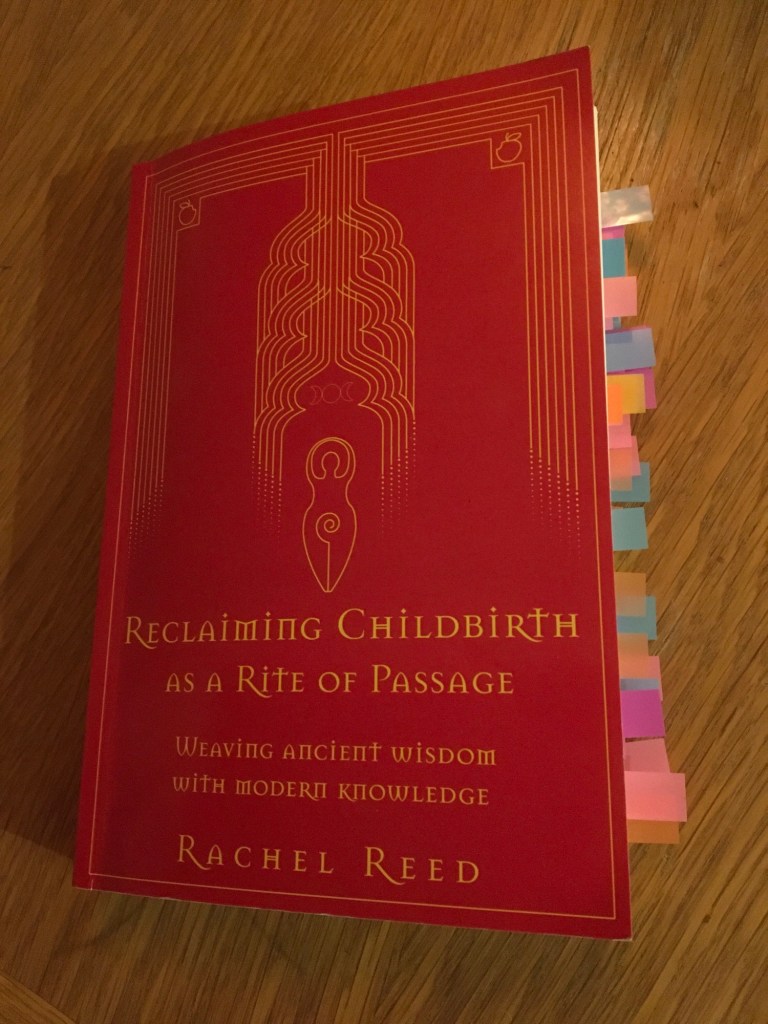
I love how Rachel quite literally weaves the story of a labouring Eve through the text and adds herstory, giving context to the birthing process within the current medicalised system.
From my personal experience, and that of my sisters and close friends, the journey to becoming a mother is the most profound and life altering process embarked upon. The rites of passage involved are myriad and highly individual, but are all too easily derailed by the rites of protection undertaken by institutions to keep the control with the care givers and prevent litigation for when things go wrong.
This book underpins those rites of passage and provides evidence (or lack there of), for the interventions offered during childbirth. It is incredibly well researched and equips pregnant women with all the information required to make decisions based on true, fully informed consent. This book also provides tools for health professionals to empower the women in their care to navigate their transition into motherhood with support, understanding and promotion of rites of passage.
I now need to go back through my sticky markers to colour coordinate them into subjects such as postpartum haemorrhage, breastfeeding etc, as this will help me revise what I’ve learned and serve as an excellent reference tool for my studies. I think this is a book that all pregnant women, midwives, maternity workers, obstetricians and other health professionals involved in their care should read.
Women who are denied their rites of passage are denied their power, often without any awareness that it is happening. This book seeks to restore the balance of power and place it firmly in the hands (and hearts) of pregnant women, by equipping themselves and their caregivers with the evidence to support their passage to motherhood.




 Peacewellbeing.co.uk