grief, Uncategorized

Dearest Richard,

December 2012

Last weekend we should have been celebrating your 42nd birthday. We should have been having a garden party, dinner in a fine restaurant or drinks in a wine bar followed by dancing. You would have lit up the dance floor with your enthusiasm, exuberance and energy.

June 2018

We still haven’t celebrated your 40th birthday, flights to Spain and lunch in a Michelin star restaurant cancelled, twice, because of covid. In your head, that means you’re still 39. In my head, you are forever preserved as young, vibrant and joyous. You were born two months before me and now I am older than you. You will not get old. You have been denied that privilege.

Your birthday will be marked with sadness, loss and heartache in perpetuity. At present, I cannot imagine a time when these feelings won’t dominate each anniversary that passes. Each thought I have of you.

And yet I smile too. I smile at the memories of the adventures we had together. Of the mischief we made, of being led astray by you, of the incitement of naughtiness between us. The most fun I’ve had in my life, you were there, leading the charge with your charm, cheek and ginormous heart.

May 2021

You had a tremendous talent for making everyone around you feel included, special and beautiful. The light that emanated from you bounced off everyone you connected with. It was your reflection.

June 2014

The fight to keep your spirit alive is a daily battle. Some days are easier than others. Some days, surrender is the only option. The only way through. Grief is an expression of love. To deny that enunciation, in whatever way it exposes itself, is to deny your existence. This, I have learnt from your beloved Henry. He travels through his grief without repudiation.

December 2017

Henry is building a charitable foundation in your name. He is creating light, from the darkness of your death, and he is preserving, perpetuating and extending your light for the benefit of others. Your light loves on.

Le Petit Singe, the charitable foundation that Henry has set up, raises money to help those affected by sudden bereavement, heart conditions and international environmental and social issues that Richard was involved with. Please visit lepetitsinge.co.uk for more information and to make a donation.

Make your own natural products, Uncategorized

How to make your own deodorant using kitchen cupboard ingredients

Hello there sovereigns, today I’m going to show you how to make your own deodorant using things that you can find in your kitchen. Plus essential oils of course.

The equipment and ingredients you need are

DIY deodorant with essential oils
Everything you need
  • a freshly boiled kettle
  • a larger bowl
  • a smaller bowl
  • measuring spoons
  • tea spoon
  • small jar (mini jam jar is fine)
  • coconut oil
  • bicarbonate of soda
  • essential oils

Method

Add a teaspoon of coconut oil to the small bowl. Pour a puddle of freshly boiled water into the larger bowl. Place the small bowl inside the larger bowl, but don’t let the water come over the top of the small bowl. Stir the coconut oil until it’s melted, it will only take a few minutes.

Once the coconut oil is melted, take the small bowl out of the larger bowl and add a level tablespoon of bicarbonate of soda to the melted coconut oil. Stir together to form a thick paste.

Add 15 drops in total of essential oil to the paste. You could use 15 drops of one oil, 7 drops each of two different oils, or 5 drops each of three different essential oils. Choose ones that you like and that don’t irritate your skin. You can make your blend of essential oils for your deodorant as unique as you are!

Now pour this into your jar and leave to cool until solid. You can put it in the fridge to speed up the cooling process if you like. Store and use the deodorant at room temperature.

To use, scrape a smidge with the back of your fingernail, rub between fingertips and then rub into your armpits. Done! Totally natural, very cheap and quick to make and an effective, yummy smelling deodorant.

Uncategorized

Essential oil hack – remove gloss paint quickly and easily with no harmful chemicals

Hi there sovereigns,

I’ve just been doing some gloss painting, my hands are a little bit covered in paint and I wanted to show you a little trick with essential oils to get the gloss paint off that is quick, easy and doesn’t involve the use of nasty chemicals.

I’m using basil essential oil, as I have a massive bottle of it and need to use it up. You could use lavender or a citrus oil, just don’t use one that’s going to irritate your skin*.

Just dab some on the areas of your hands that have paint on and rub it in. You might want to use a nail scrubber if it’s under your nails. Use your normal hand soap to wash it off and job’s a good un!

Isn’t that better than using some dodgy chemical stuff that’s going to harm your hands and the environment when it’s washed down into the rivers? And your hands will smell delightful too!

This is the first in a short series of videos I’m going to put out on using essential oils in ways you might not have thought of before. They’ve been a part of my life for nearly 20 years now and there’s not a day that goes by that I don’t use them in some way. I can’t say when the next video will be (I decided a long time ago that I would rather live my life in the real world rather than constantly post only the highlights online), but I’ve got a few ideas floating about to help you integrate natural resources into your everyday life, reduce your reliance on commercial, shop bought (and often environmentally damaging) products and empower yourselves with skills and knowledge.

Please be aware that some essential oils are irritant to the skin when not used correctly. Always seek the advice of a qualified, experienced aromatherapist and your trusted health professional. 

Uncategorized

Investigating the effect of reflexology on the breast milk volume of preterm infants’ mothers

A critical review of Mohammadpour A, Valiani M, Sadeghnia A, Talakoub S. Investigating the effect of reflexology on the breast milk volume of preterm infants’ mothers. Iranian J Nursing Midwifery Res 2018;23:371-5.

Mohammadpour et al (2018) conducted a clinical trial on the effects of reflexology on the breast milk volume of mothers of preterm infants. The clinical trial aimed to provide new evidence for the effectiveness of reflexology on breast milk volume and further explore the relationship between lactation and reflexology.  The trial indicates that reflexology is effective in increasing breast milk volume on mothers of preterm infants. However there are several factors that need to be considered when interpreting the results. 

There is no mention in the selection criteria of the mothers of the frequency of breastmilk removal (1) and the effect of preterm delivery on mammogenesis (2) as these are known factors for affecting breast milk volume. As the article itself states, “…the mechanism of milk production is complex, detailed research is required on the relationship between lactation and reflexology”. 

The study shows that statistically, reflexology treatment increased breast milk volume for the first four days of the intervention. It is a low cost intervention with no specialist equipment required but does require a commitment of time from both the mother and the person giving the treatment and training of personnel to administer it. 

The trial contributes to a small but significant group of research on the effects of reflexology on labour, delivery and lactation (11) (12) (5).  It adds to the body of knowledge in this emerging field of reflexology research and shows us how much more there is to discover when there is enough data to generate systematic reviews and meta-analysis. Only then can conclusive arguments be made. 

The points stimulated during the treatment given were those generally accepted to affect the areas of the breasts (between the metacarpals of the toes) and the pituitary gland reflex (on the pad of the big toe).  The pituitary reflex point is included as the point at which the oxytocin hormone originates (9), Oxytocin causes the ‘let down’ reflex of the milk, pushing milk out of the breast when the breast is stimulated by suckling from a baby or the suction of a breast pump. 

All the mothers who participated in the trial had delivered their baby via Caesarian section, which is known to delay the onset of lactogenesis II (10). This puts all the mothers on a level playing field, as mixed delivery methods can not be compared. It is unfortunate that the trial couldn’t have been completed exclusively on mothers who had delivered vaginally, as this is the norm.  As the article states “…the impossibility of selecting participants who had had a natural delivery was another limitation of this study”. 

I question the ethics of separating the mothers into just the two groups of intervention and control. Would the psychological effects of participating in a study but not knowingly getting the intervention (ie foot massage) have an effect on lactation?  Could it be the time taken to receive the intervention, allowing the mothers to sit and relax at an undoubtedly stressful period of their lives have more of an effect than the reflexology itself? We already know that reflexology has been shown to reduce levels of anxiety (3)(4) by reducing stress hormone (adrenaline and noradrenaline) levels and increasing endorphins and oxytocin (5), which has a direct effect on lactation (6). Might it have been a better methodology to separate them into a reflexology group, a general foot massage group and a control group? This may then definitively prove that it is the specific reflex points that are responsible for the increase in breast milk volume. It is unclear what the researchers are trying to prove with their methodology. 

The frequency of milk removal from the breast is one of the greatest contributing factors to output volume (7), and timing of early breast milk expression too (8). These factors were not apparent in the selection of the mothers for the trial and their non-compliance in the researcher’s request to not use other interventions to increase milk supply can not be ruled out. Prolactin, the hormone responsible for breast milk production, increases throughout pregnancy, and premature deliveries between 22 to 34 weeks gestation may cause mammogenesis to be incomplete for full lactation (2). Again, this has not been taken into account in this study and will have an impact on the milk volume output, and as the mothers selected are between 29 – 36 weeks gestation, conclusions are hard to draw. 

It is a very small scale study and although the statistics drawn from it clearly show there is an increase in breast milk volume in the reflexology intervention group, there are too few participants to say with complete confidence that reflexology has an effect. Further trials must be undertaken, with more precise selection criteria and larger samples to improve our understanding of the reflex points and their effect on breast milk volume. This is an emerging field and this trial shows how much more we have to learn about reflexology and it’s potential benefits.  It has shown some interesting and exciting insights into the relationship between reflexology and breast milk volume and I look forward to more research being carried out and published. The stronger the evidence base, the stronger the arguments will be to include reflexology treatment in the care of mothers and their infants during pregnancy, child birth, breastfeeding and beyond. 

References 

(1) Infant demand and milk supply. Part 1: Infant demand and milk production in lactating women.

Daly SEHartmann PE. 1995.

(2) Complicating influences upon the initiation of lactation following premature birth Cregan, M. D. et al (2007).

(3)Effect of foot reflexology on anxiety of patients undergoing coronary angiography Mahmoudirad et al 2013

(4)The Effect of Foot Reflexology on Anxiety, Pain, and Outcomes

of the Labor in Primigravida Women. Hanjani et al 2013

(5) A concept analysis: the effect of reflexology on homeostasis to establish and maintain lactation. Tipping et al 2000

(6) The Womanly Art of Breastfeeding, La Leche League International, 8th edition, Pinter & Martin. 

(7) Breastfeeding and Human Lactation, Riordan & Wambach, 4th edition, Jones & Bartlett

(8) Effect of early breast milk expression on milk volume and timing of lactogenesis stage II among mothers of very low birth weight infants: a pilot study.

Parker LA1, Sullivan SKrueger CKelechi TMueller M.

(9) Reflexology in Pregnancy and Childbirth, Tiran, 1st edition, Churchill Livingston. 

(10) Risk factors for suboptimal infant breastfeeding behavior, delayed onset of lactation, and excess neonatal weight loss. Dewey KG1, Nommsen-Rivers LAHeinig MJCohen RJ. 2003.

(11) The Effect of Reflexology on Pain Intensity and Duration of Labor on Primiparas.  Dolatian et 2011

(12) Reviewing the effect of reflexology on the pain and certain features and outcomes of the labor on the primiparous women Mahboubeh et al, 2010

Uncategorized

The Aromatic Allotment

I had a wonderful day on Tuesday, with my good friend Anita, on her aromatic allotment in Somercotes. She gave us (my friend Barbara came too) a tour of the extensive plot where she grows all sorts of wonderful plants, some for their healing properties, some to use as cut flowers and some to eat.

Rosa Damascena ‘Kazanlak’

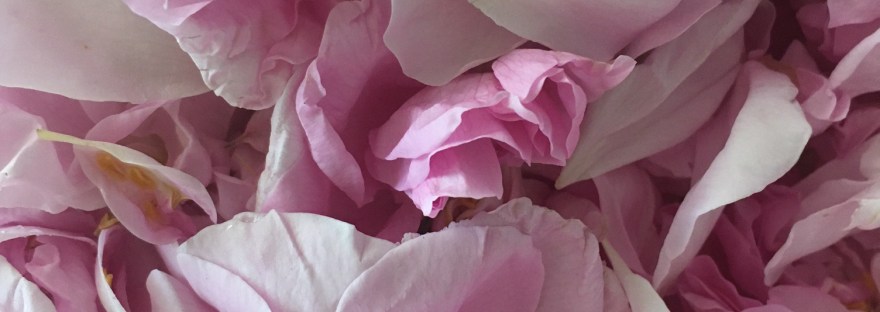
Her Damascena roses (Rosa Damascena ‘Kazanlak’) were blooming in full, beautiful flower, so we picked the petals to distill into rose water. Why haven’t humans invented a way to smell things through the internet yet?! If only you could, it was heavenly, sweet and floral and smooth and rounded and delicious. It’s like getting a hug from your favourite auntie, all encompassing and so comforting and uplifting.

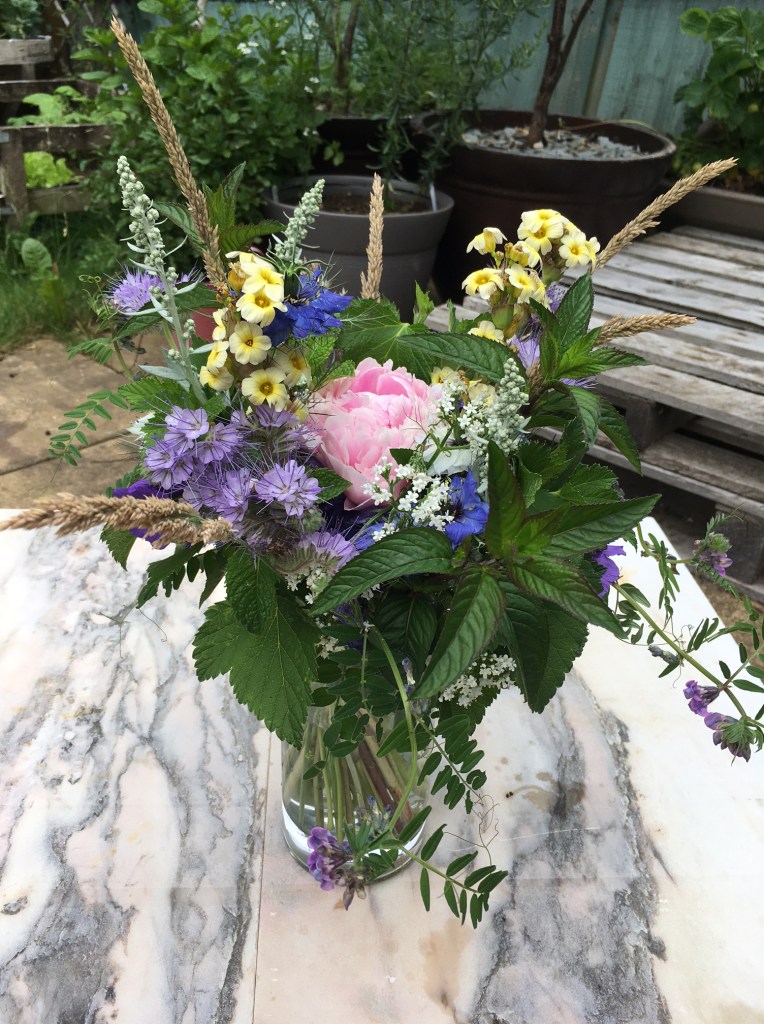
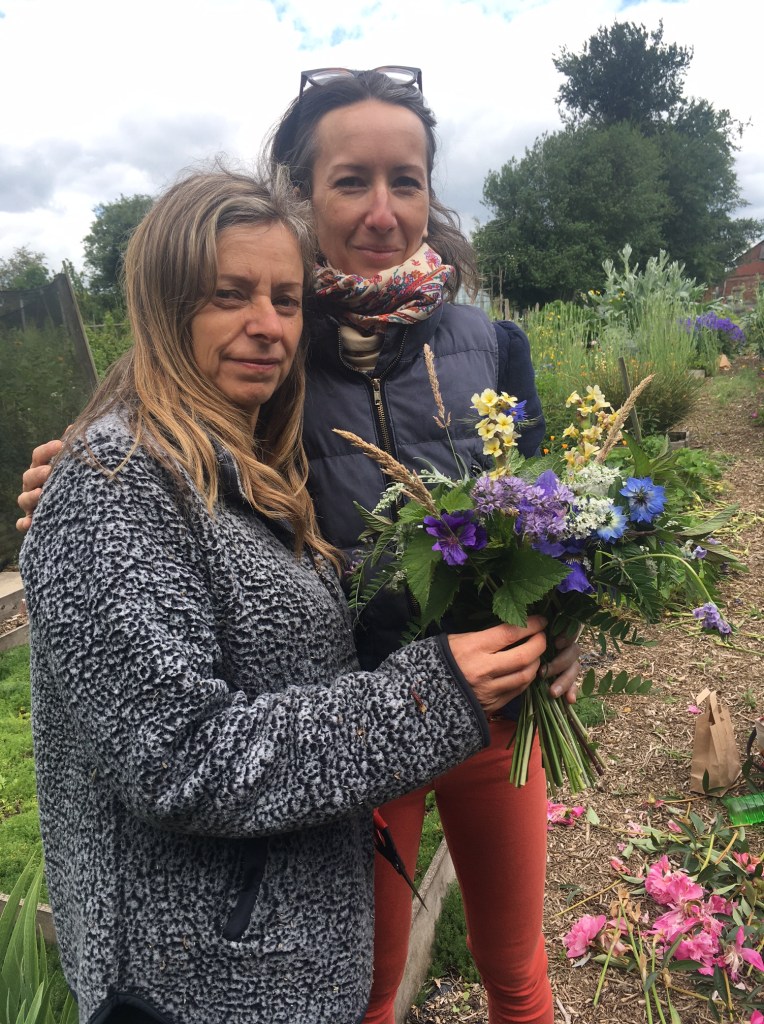
Once we had picked the rose petals, Anita selected some cut flowers to make into a gorgeous hand-tied bouquet for me. Centred around a peony, she added different types of mint, geraniums, black currant stems, nigella, valerian and more, with vetch trailing around the edges. Again, I wish you could smell it as it just smells of summer. Light and fresh, floral and minty, green and bright and refreshing.

My beautiful, locally grown, hand-tied bouquet

With our arms full of fragrant loveliness, we took the short walk to Anita’s house where her still was set up on her hob awaiting the rose petals. They were packed into the bottom of the still with water added on top. The pump to circulate the cold water to cool the distillate was powered up and the gas was lighted below the still. I found the whole process fascinating, and it brought back fond memories for me of touring the Drôme Valley in France in 2008, where a lot of the essential oils I use are grown, harvested and distilled.

The copper still, with rose petals packed into the belly, and the cooling water pumped from the bucket

We watched, mesmerised, as the temperature in the still rose, and the condensed, perfumed water (known as a hydrolat or hydrosol) started to trickle out. As we waited for the process to finish, Anita gave us a yummy lunch of home-made sourdough french stick with a selection of cheeses, tomatoes and cucumber.

Rose petals, now drying in my airing cupboard

I was also given a bag of rose petals to take home, which are drying in my airing cupboard as I type. Every time I open it, I get the most amazing waft of rose. I’m wondering if I should put them into honey and have rose honey in a few weeks?

Anita and me. I’m sure I’m not that much taller than her!

Anita is a very talented florist, and if you’d like a beautiful bouquet (or wedding flowers, floral cake topper, or funeral tribute etc), that is locally grown with love and care, and arranged in the most stunning way, please contact her. You can see her designs on Instagram here https://www.instagram.com/aromaticallotment/?hl=en-gb and contact her via her website here http://aromaticallotment.com/