maternity, midwifery, pregnancy, Uncategorized

UK Maternal Deaths Up 59%—This Is a Crisis

MBRRACE 2024

Maternal mortality in the UK rose by 59% from 2013 to 2021. Even excluding COVID, it’s still up 37%—and the spike started before the pandemic.

MBRRACE 2024

So what’s going on? Staffing shortages? Not really—vacancy rates actually dropped. Obesity? Up just 8%. Gestational diabetes? Rising, but data’s patchy. Meanwhile, Black women are nearly 3x more likely to die, and Asian women and those in deprived areas are 2x more likely.

MBRRACE 24

The leading killers? Blood clots, suicide, and sepsis. And guess what increases clot risk? Amongst other things – C-sections (up 53%) and long hospital stays—like those caused by induction of labour, which rose 43%. Nearly 4 in 10 births are now surgical, despite WHO saying rates above 1 in 10 don’t improve outcomes. Sepsis rates tripled. And mental health? 79% of women report birth trauma. This isn’t just bad luck—it’s systemic. If I were Baroness Amos, I’d be listening to the families living this nightmare and the MIDWIVES that can make this better.

Because a 59% increase in women dying in pregnancy, childbirth and up to a year after is not acceptable.

References

Further Reading

Book Reviews, midwifery

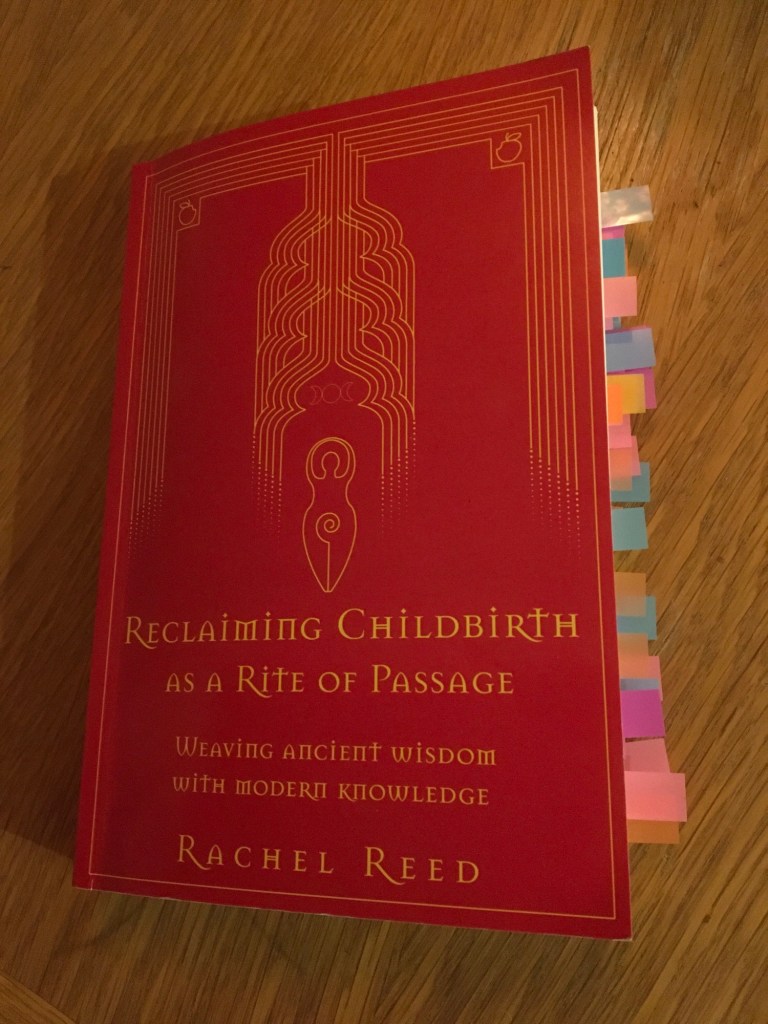
Book Review: Reclaiming Childbirth as a Rite of Passage, by Rachel Reed

I don’t think I’ve ever put so my sticky markers in a book! This is packed full of gems of information that take you on a journey through normal physiological birth, informing the reader of the rites of passage of childbirth and how these rites have been perverted over the centuries.

So many sticky notes!

I love how Rachel quite literally weaves the story of a labouring Eve through the text and adds herstory, giving context to the birthing process within the current medicalised system.

From my personal experience, and that of my sisters and close friends, the journey to becoming a mother is the most profound and life altering process embarked upon. The rites of passage involved are myriad and highly individual, but are all too easily derailed by the rites of protection undertaken by institutions to keep the control with the care givers and prevent litigation for when things go wrong.

This book underpins those rites of passage and provides evidence (or lack there of), for the interventions offered during childbirth. It is incredibly well researched and equips pregnant women with all the information required to make decisions based on true, fully informed consent. This book also provides tools for health professionals to empower the women in their care to navigate their transition into motherhood with support, understanding and promotion of rites of passage.

I now need to go back through my sticky markers to colour coordinate them into subjects such as postpartum haemorrhage, breastfeeding etc, as this will help me revise what I’ve learned and serve as an excellent reference tool for my studies. I think this is a book that all pregnant women, midwives, maternity workers, obstetricians and other health professionals involved in their care should read.

Women who are denied their rites of passage are denied their power, often without any awareness that it is happening. This book seeks to restore the balance of power and place it firmly in the hands (and hearts) of pregnant women, by equipping themselves and their caregivers with the evidence to support their passage to motherhood.

midwifery

I’m now a student midwife!

And still enjoying seeing clients for aromatherapy, Indian head massage, reflexology and Ayurvedic yoga massages.

I started the course last month (September 2023) and am due to graduate in summer 2026. So far so good, although it is, inevitably, affecting my availability to see clients. However, I still love giving massage and have no plans to stop for the foreseeable future.

The course is divided into theory blocks of 6-8 weeks, and work-placement blocks of 6-8 weeks. During theory blocks, I’ll be attending university in the week, so I can take appointments for evenings and weekends, plus usually one week day per week.

On work-placement blocks, I will either be working 3/4 shifts per week in a hospital (and therefore will have 3/4 days a week available for appointments) or in the community, which will be Monday to Friday, 8am – 4pm, so will have evenings and weekends free.

I know that there will be times when appointments have to be moved, and I apologise in advance for any inconvenience caused. I will always give as much notice as possible and I appreciate your understanding in this.

The skills I will gain as a midwife, combined with the skills I already possess as a massage therapist, will enhance and deepen my offering to you, my clients. I see the midwifery degree as an extension of my current practice and can’t wait to combine both sides of my work.

Give me a call and I’ll get you booked in for a relaxing massage asap.

midwifery, Uncategorized

Access all areas

Phew, thank goodness that’s over! I’m pleased to say that I have completed my ‘Access to Higher Education for Health Professionals’ course and can now breathe a big sigh of relief.  The tutors warned us at the start of the course, in September last year, that it would be stressful, and they weren’t wrong. It’s the equivalent of doing three ‘A’ levels in one year and it has made me a horrible person to be around at times.

But now it’s over, and I am delighted, and very proud too, to say that I have achieved distinctions in every graded module. This means that I can start the Midwifery degree in September feeling much more confident in my academic abilities.  And I have been told by quite a few people that the access course is harder than the first year of university.  I guess I’ll have to wait and see about that.

For although I have many qualifications, none of them are recognised outside of the world of complementary therapies. And although I’ve always considered myself quite bright, I lost my way at the end of secondary school and managed to scrape through my GCSEs, but not achieve any higher (nationally recognised) qualifications, hence having to do the access course.

I do love learning and have continued to learn throughout my career. I am fascinated by how our bodies work and the more I learn, the more I become in awe of the human body. It has been a challenge to my holistic, non-pharmaceutical approach to health to reduce the body to cells, organs, systems, diagnoses and prognoses. Especially considering I have been delving into terrain theory over the last 18 months (more on that to come later), and have always believed that, given the right conditions, the body can heal itself.

I am excited to start the midwifery degree in September, and apprehensive too.  I fell in love with massage and essential oils 20 years ago. I fell in love with supporting women to breastfeed their babies seven years ago.  I don’t know if I’m going to fall in love with being a midwife, and I already know that I don’t like the system in which midwifery sits. However, what has kept me going through this access course, and what will continue to drive me through the degree is that the world needs midwives like me.  Watch this space…